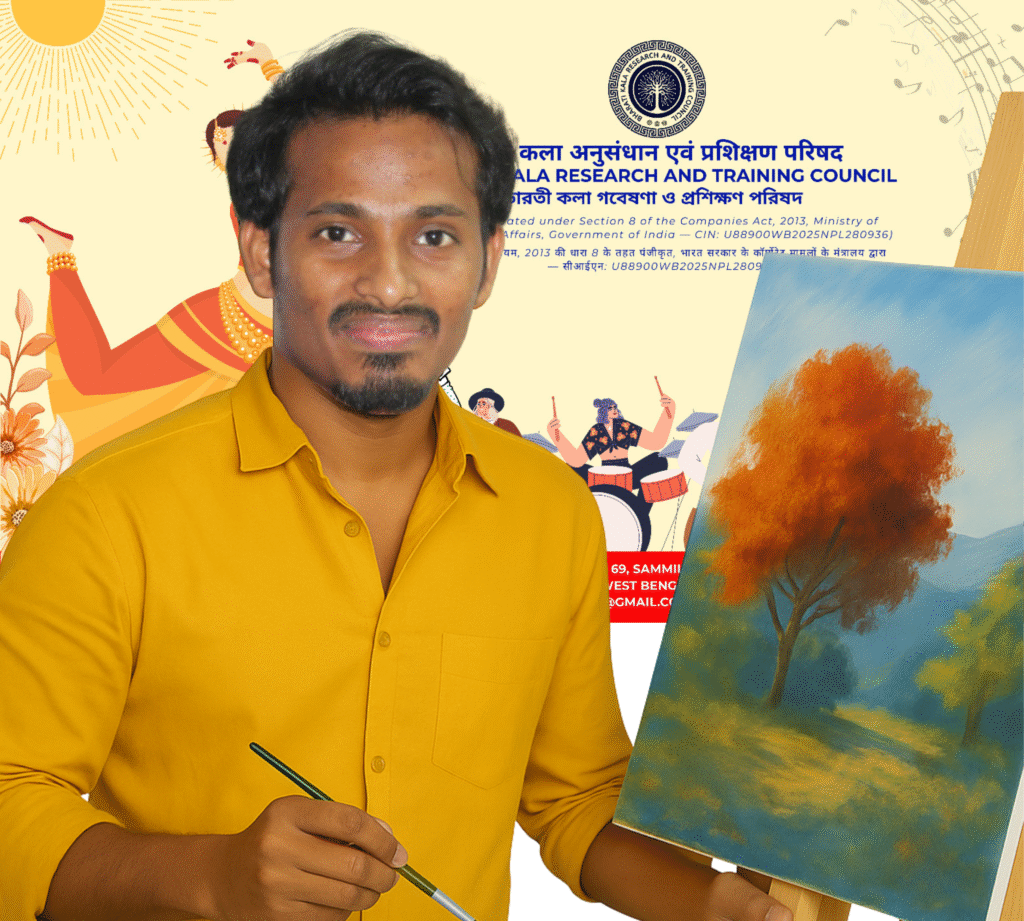
Name: Apu Gharami
Age: 27/05/2000 (25)
Profession: Fine Artist, Cultural Promoter, and Creative Visionary
Location: Kolkata, India
Introduction
Art is not only a medium of expression but also a bridge between the inner self and the outer world. For Apu Gharami, a Now 25-year-old fine artist from Kolkata, art has been both a lifelong passion and a professional pursuit. Over the past seven years, he has dedicated himself to painting, drawing, and exploring different art forms that blend India’s rich cultural heritage with modern creativity. Beyond being an artist, he has also embraced the roles of teacher, innovator, and cultural leader, creating platforms to promote art and empower young talent. His life and career embody the philosophy that art is not just to be admired but lived, practiced, and shared.
Early Life and Inspiration
Born and raised in Kolkata—a city known for its cultural vibrancy and artistic history—Apu grew up surrounded by traditions of painting, literature, theatre, and music. From an early age, he showed a natural inclination towards drawing and colors. While many of his peers followed conventional academic paths, Apu immersed himself in the world of sketchbooks, brushes, and canvases.
Kolkata, being home to great artists like Rabindranath Tagore, Jamini Roy, and Abanindranath Tagore, influenced his perception of art as a living cultural identity rather than a mere hobby. The city’s walls, festivals, and art exhibitions inspired him to look deeper into how art reflects society and shapes human experience.
Artistic Journey
Apu’s formal journey as a fine artist began more than seven years ago, but his practice evolved gradually through experimentation, self-learning, and continuous practice. Unlike traditional academic training, he embraced art as a personal discipline, where curiosity and passion became his greatest teachers.
Over time, he mastered multiple mediums:
- Oil Painting – bringing depth, realism, and strong emotion to his canvases.
- Watercolor – using subtle layers to create softness and vibrancy.
- Sketching and Drawing – focusing on precision, detailing, and form.
- Mixed Media & Crafts – merging traditional methods with modern styles.
His works often explore themes of culture, heritage, identity, human emotion, and the relationship between tradition and modernity.
Philosophy and Style
For Apu, art is not just an external skill but a spiritual and cultural practice. His artistic philosophy revolves around three pillars:
- Preservation of Heritage – Reviving traditional Indian art forms and ensuring they remain relevant for younger generations.
- Experimentation – Blending folk art with modern techniques to create something fresh, relatable, and timeless.
- Expression of Emotion – Portraying the depth of human feeling—joy, struggle, hope, and resilience—through brushstrokes and color palettes.
His artistic style can be described as expressive realism with cultural symbolism. While many of his works depict real-life scenes, they often carry hidden layers of meaning, encouraging the viewer to reflect deeply.
Exploration Beyond Art
While art is Apu’s main identity, he has also gained knowledge in coding, ethical hacking, and digital technology. This unusual combination of skills allows him to merge art and technology, a fusion that many modern artists are exploring globally.
Instead of seeing technology as separate from art, Apu uses it as a tool to amplify creativity, build digital platforms, and create opportunities for young artists. His technical knowledge has played a vital role in his most ambitious initiative—the Bharati Kala Research & Training Council (BKRTC).
Founding BKRTC – A National Art & Cultural Board
In 2025, Apu founded the Bharati Kala Research & Training Council (BKRTC), a non-profit, government-recognised national art & cultural board. BKRTC was established under Section 8 of the Companies Act, 2013 and is officially incorporated by the Ministry of Corporate Affairs, Government of India. It is also recognised under NITI Aayog (Darpan Portal) and has obtained registrations including 80G, 12A, CSR, PAN, TAN, and ESIC.
The vision behind BKRTC is to preserve, promote, and professionalize Indian traditional arts, crafts, and cultural education. While many art boards exist, few have attempted to bring structured recognition, digital accessibility, and nationwide cultural outreach under one umbrella. Through BKRTC, Apu has created a platform where artists, students, and institutions can come together to share, learn, and showcase their talent on both national and international stages.
Key initiatives of BKRTC include:
- Examinations & Certifications in fine arts, music, dance, drama, crafts, and cultural studies.
- Workshops & Exhibitions for students and emerging artists.
- Digital Platforms for online art galleries, certificate verification, and art-based social networking.
- Collaborations with schools, academies, and cultural institutions.
- Scholarships & Talent Search Programs to support gifted young artists.
Through BKRTC, Apu has transformed his personal journey into a collective movement for cultural empowerment.
Achievements and Recognition
- Over 7 years of professional practice as a fine artist.
- Founder & Director of BKRTC, registered and recognized by Government of India.
- Successfully developed a national-level art & cultural council within a short span.
- Organized and contributed to art exhibitions, cultural programs, and creative workshops.
- Guided students and art enthusiasts through structured learning paths and certifications.
- Actively promoting digital innovation in art education by creating student dashboards, QR-coded certificates, and online art galleries.
Contribution to Society
Art for Apu is not only personal but also social. He strongly believes that art has the power to transform communities by instilling confidence, creativity, and cultural awareness. Through BKRTC, he ensures that students from all backgrounds—including rural and underprivileged areas—get access to recognized art education.
By combining traditional Indian art forms with modern technology, he is creating bridges between heritage and the digital future. His work stands as a testimony to the idea that art education is not a luxury but a necessity for cultural growth and human development.
Vision for the Future
Looking ahead, Apu Gharami envisions BKRTC becoming one of India’s leading cultural institutions with international collaborations, ISO standards, and government affiliations. His long-term goals include:
- Establishing art universities and research centers dedicated to Indian heritage.
- Expanding online cultural education platforms to reach global learners.
- Integrating art with technology to create digital exhibitions, NFTs, and AI-based creative platforms.
- Promoting Indian art at international cultural festivals.
- Ensuring that every talented child in India has access to quality art education and recognition.
Conclusion
The life and career of Apu Gharami embody the spirit of dedication, innovation, and cultural pride. From a young boy sketching in Kolkata to the founder of a national art & cultural board, his journey reflects resilience and vision. His biography is not just the story of an individual artist but also of a movement that seeks to empower communities through art.
In every canvas, exhibition, and initiative, Apu continues to prove that art is not only about colors and strokes but about building connections, preserving heritage, and inspiring future generations. His mission is clear—to elevate Indian art to global recognition and to ensure that creativity remains at the heart of education and human progress.